
Pelvic Health Physiotherapy
Service user information leaflet
Review due: 2025
Contact details
01592 648106

Some women get a perineal tear when they have a baby. This happens to about 3 out of every 100 women who have a vaginal birth. It happens more often the first time a woman has a vaginal birth (about 6 out of 100 women). If a woman has had a vaginal birth before, it happens less often (about 2 out of 100 women). (RCOG, 2019)
What is a perineal tear?
The perineum is the area of skin between the vagina and the anus. When a baby is born, this area can sometimes tear as the baby comes out.
There are four types of tears:
- First degree tear: a small tear in the skin. It usually heals on its own.
- Second degree tear: a bigger tear that goes into the muscle. It usually needs stitches.
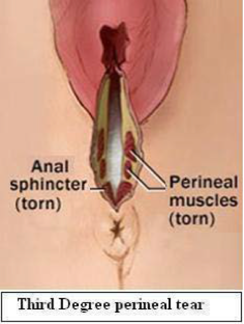
- Third degree tear: a deep tear that goes into the muscle around the anus (back passage). These are called 3a, 3b or 3c depending on the depth. It will need stitches.
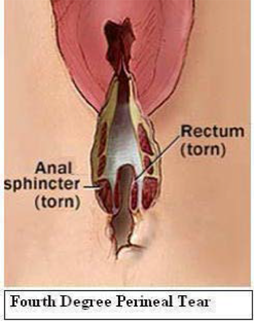
- Fourth degree tear: The deepest tear. It goes into the perineal muscles, anal sphincter muscles and lining of the anus. It will require stitches.
Third and fourth degree tears are usually stitched in theatre and you will be given information about how to care for the wound. Most women (60-80%) who have a third or fourth degree tear get better after treatment and healing. A small number of women may have trouble controlling their bladder or bowels after this.
Why do they happen?
A tear is more likely to happen if:
- This is your first vaginal birth.
- You are of South Asian origin.
- Your second stage of labour is over 1 hour long.
- You need forceps or a ventouse (suction device) to help deliver your baby.
- One of your baby’s shoulders was stuck (shoulder dystocia).
- You have a baby over 4kg/ 8lbs 13oz.
- You have had a 3rd/4th degree tear before (7% of women).
How is it treated?
After your baby is born, the tear will be stitched in an operating room. The stitches will dissolve on their own as you heal.
You will have three types of medicine to help you get better:
- Pain relief – To help manage pain.
- Antibiotics – These help stop infection.
- Laxatives – These help in the early days to keep the poo soft and easy to pass. This will help the wound to heal.
Please note: If your poo becomes too soft and hard to control, tell your midwife or doctor. They can check if you need a smaller dose or if it’s time to stop taking laxatives.


How to take care of yourself
- Keep the area clean. Wash it every day with water. Do not use soap or other products. After a shower or going to the toilet, gently pat the area dry.
- If your skin feels dry, ask your pharmacist about a safe cream or emollient to use.
- Use an ice pack for the first 1-2 weeks to help with swelling and pain. Put a cloth between your skin and the ice pack so you don’t get ice burns. Keep it on for 5-10 minutes. You can do this 4-5 times a day if it helps. Leave 2-3 hours between use of ice pack.
- Change your sanitary pads regularly to help keep the area clean and dry. Wash your hands before and after using the toilet.
- Move around and change position often. Don’t sit or stand for too long. This helps the wound heal faster. If sitting hurts, try lying on your side with a pillow between your legs for short times.
- Take it easy and listen to your body. Rest when you need to. Ask family and friends to help with housework or looking after children.
- Avoid heavy lifting for 4-6 weeks while your body heals. After that, you can slowly start doing more as you feel ready.
- If you need to lift your baby or small child, bend your hips and knees, push through your legs, and breathe out as you lift.

Going to the toilet
- For the first few days after your third- or fourth-degree tear is repaired, you might not be able to control your bowels as well as before. This should improve quickly.
- Drink 2-3 litres of fluid slowly throughout the day and eat healthy foods like fruit, vegetables, cereals and wholemeal bread orpasta. This helps to avoid constipation.
- You can look at the NHS Fife Constipation leaflet for more tips.
- When emptying your bowels, it can help to put a small step under your feet. Lean forward, rest your arms on your knees, and keeping breathing slowly into your tummy. To support the wound when doing a poo, you can hold some toilet paper against the perineum with light pressure to make it more comfortable.
- After a bowel movement, wipe gently from front to back to reduce the risk of infection. You can pour warm water over the area or have a quick shower to help clean the area if needed. Gently pat dry after.


Pelvic floor exercises
- Pelvic floor exercises help increase blood flow which supports healing. They also help strengthen the muscles around the vagina and anus. Strong pelvic floor muscles can improve bladder and bowel control.You can learn to do these exercises in
- The “Fit for the Future” booklet (scan the QR code) and the
- NHS Fife Pelvic Floor Exercise Leaflet which can be found on the Fife Pelvic Health Physiotherapy website (scan the QR code)
- Try to do the exercises when you are feeding your baby. This helps you remember and make the exercises part of your daily routine.
Returning to sexual intercourse
- You should wait until the bleeding has stopped and the tear has healed before having sex. This can take several weeks. After that you can have sex whenever you feel ready.
- Using a lubricant can help reduce dryness and discomfort around the vagina. Speak to your pharmacist about the best type to use if you are using condoms. If you have difficulty having sex or it is painful, speak to your GP for advice and support.
If you have any concerns, speak to your GP.
If you have uncontrolled bladder or bowel leakage, call the maternity triage line for advice.
You will be offered a follow up appointment with a specialist nurse, usually 10–12 weeks after birth. This appointment is to check that your tear has healed and that your bladder and bowel are working well.
If you have problems such as pain, leaking urine, or leaking stool, you may be referred to a specialist physiotherapist for further support.
You can find more information about recovering from birth on the NHS Fife Pelvic Health Physiotherapy Website (scan the QR code).

References
Care of a third- or fourth-degree tear that occurred during childbirth (also known as obstetric anal sphincter injury OASI) | RCOG (2019)
NHS Fife Urogynaecology Department
NHS Fife Midwifery Team
Wiley. (2014). Mode of delivery following perineal tear, recurrence rate in subsequent pregnancies.
Accessible formats
If you require this information in a community language or alternative format such as Braille, audio, large print, BSL, or Easy Read, please contact the Equality and Human Rights Team at: email: fife.EqualityandHumanRights@nhs.scot or phone 01592 729130. For people with a hearing or verbal impairment you can also contact the team through the NHS Fife SMS text service number on 07805800005.
Learn how to create a shortcut to a web page you visit regularly -
Video - create a shortcut icon on your mobile phone.


